
Lives played in Ableton Live, over images that are not a music video: real scientific simulations, computed frame by frame and driven by the music.
 1:01:41
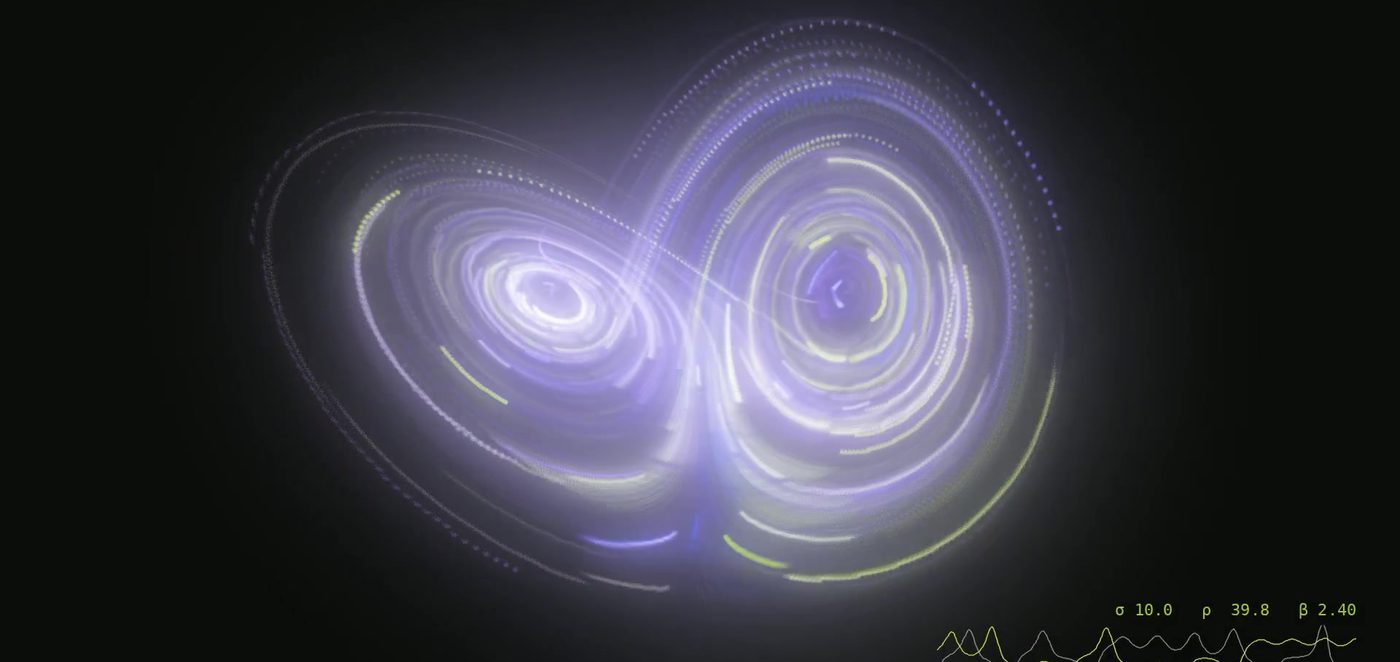
An hour of tribe tekno over the Lorenz attractor, the model that revealed chaos: 86,400 particles driven by the music, ten parts, ten colours.
 36:24
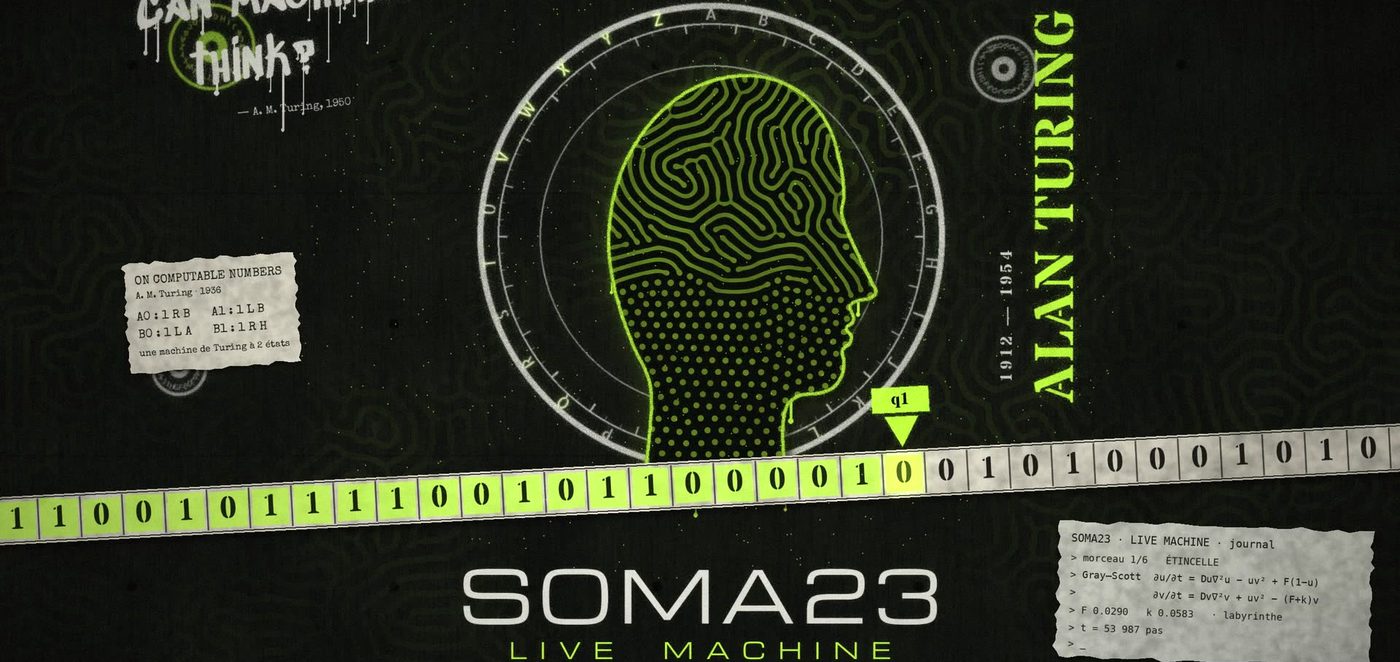
A tribute to Alan Turing: a Gray-Scott reaction-diffusion draws its own patterns inside a head, in time with the live. Six tracks, six patterns.
Things built for the pleasure of building them. Almost everything runs in the browser, with no account to create; the apps install on Android. The interfaces are in French.
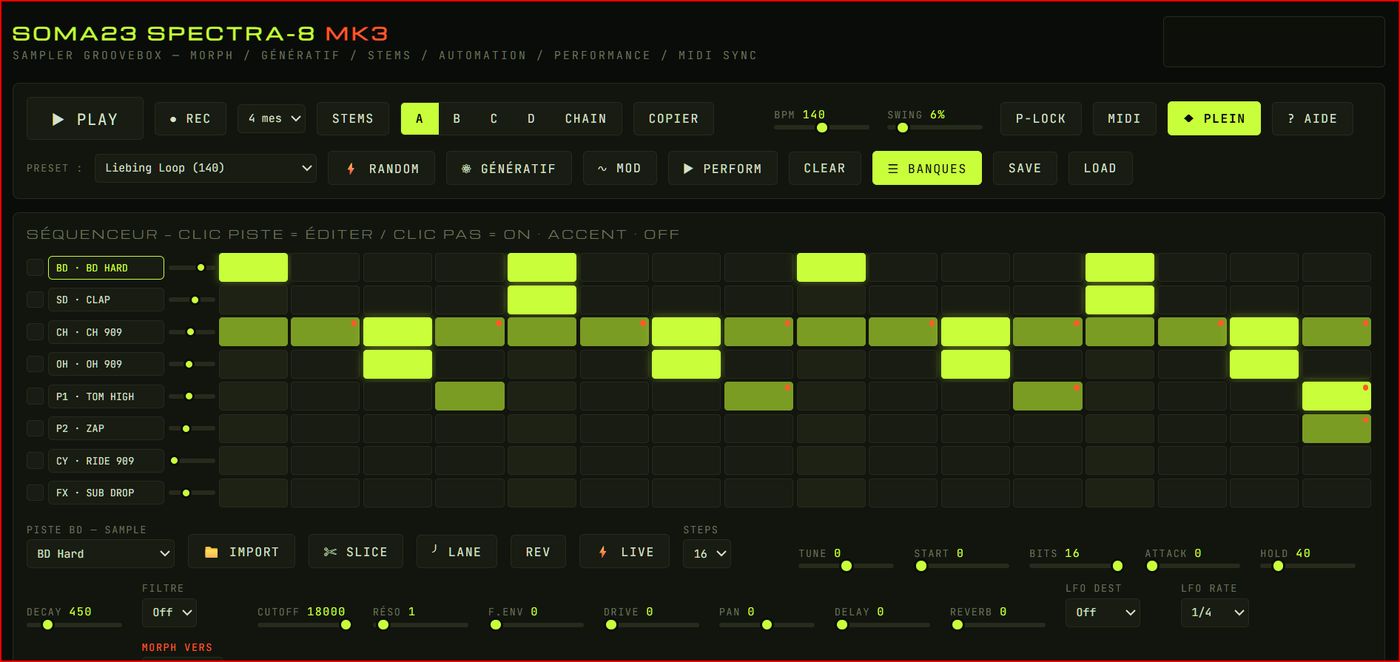
Eight tracks, real-time synthesis, WAV and stems export.
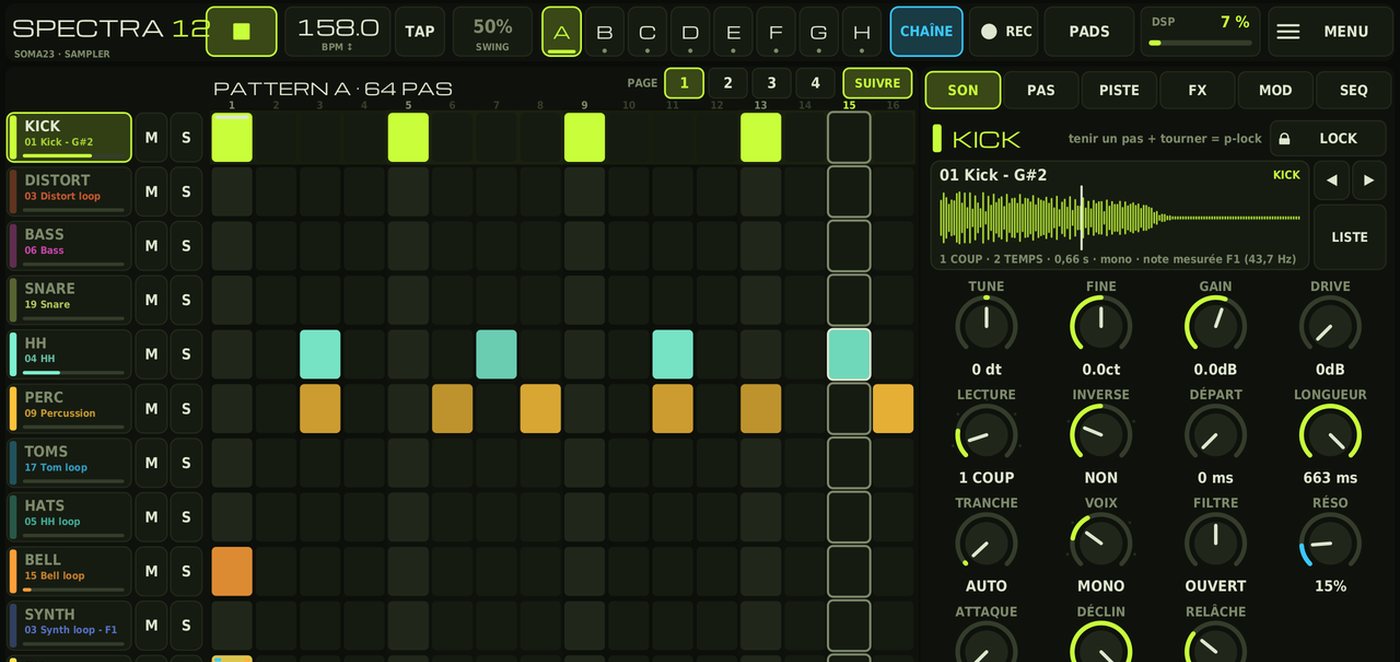
The sample groovebox for tablet and phone: twelve tracks, 1,275 sounds in four packs, 24 factory projects from tribe to techno, WAV and stems export.
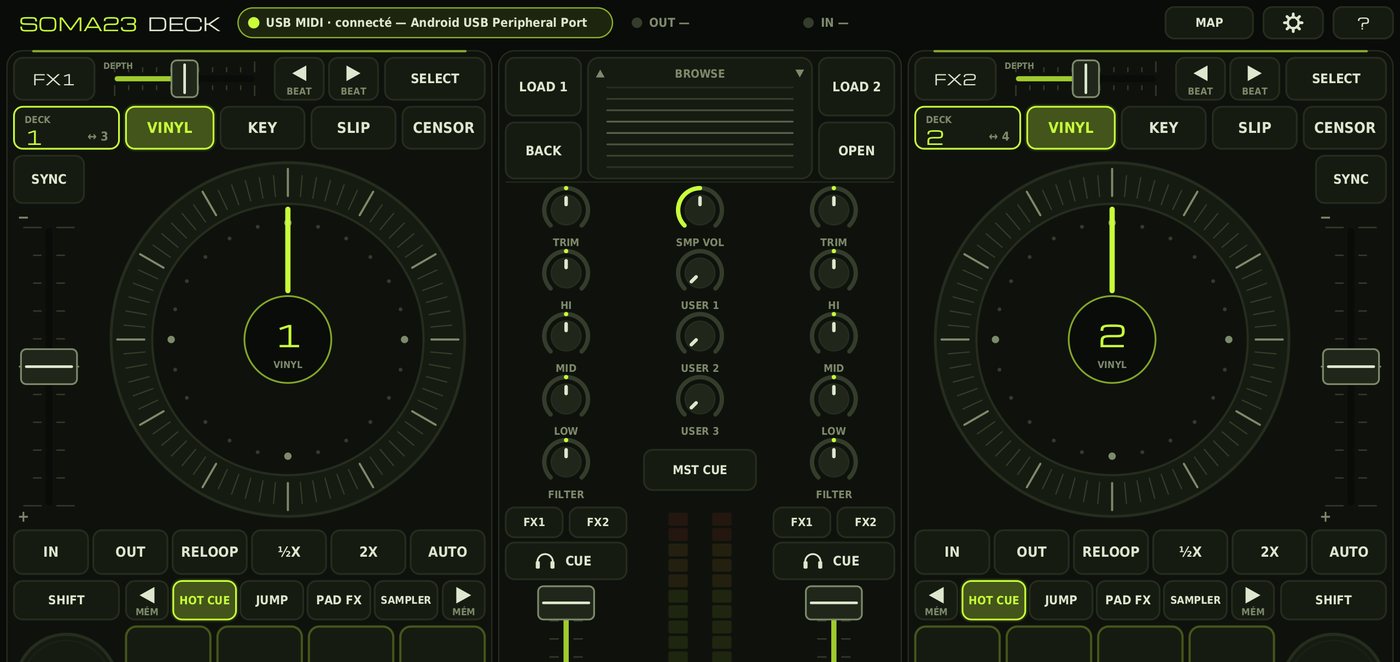
Your tablet becomes a DJ controller for rekordbox, connected to the computer over USB MIDI: two decks with jog wheels and pads, the mixer in the middle, mapping included.
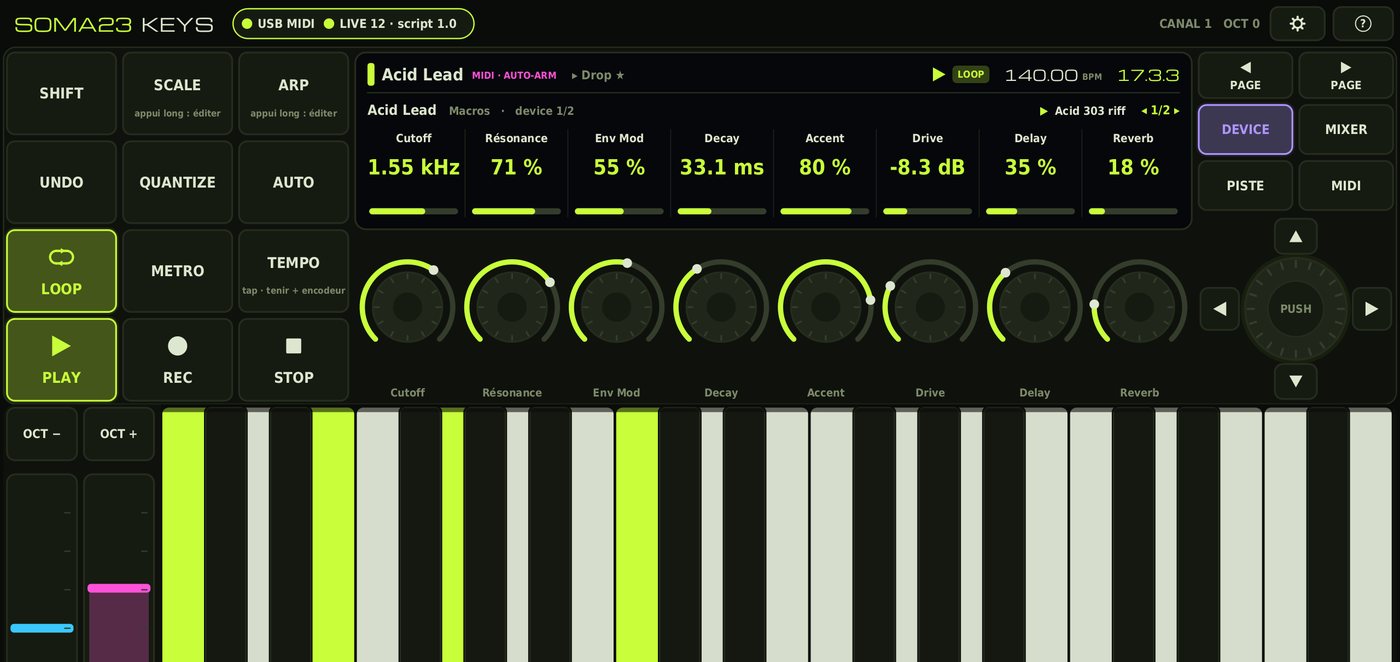
A 32-key keyboard and 8 encoders on your tablet, connected to Ableton Live over USB MIDI, with scales, chords and an arpeggiator.
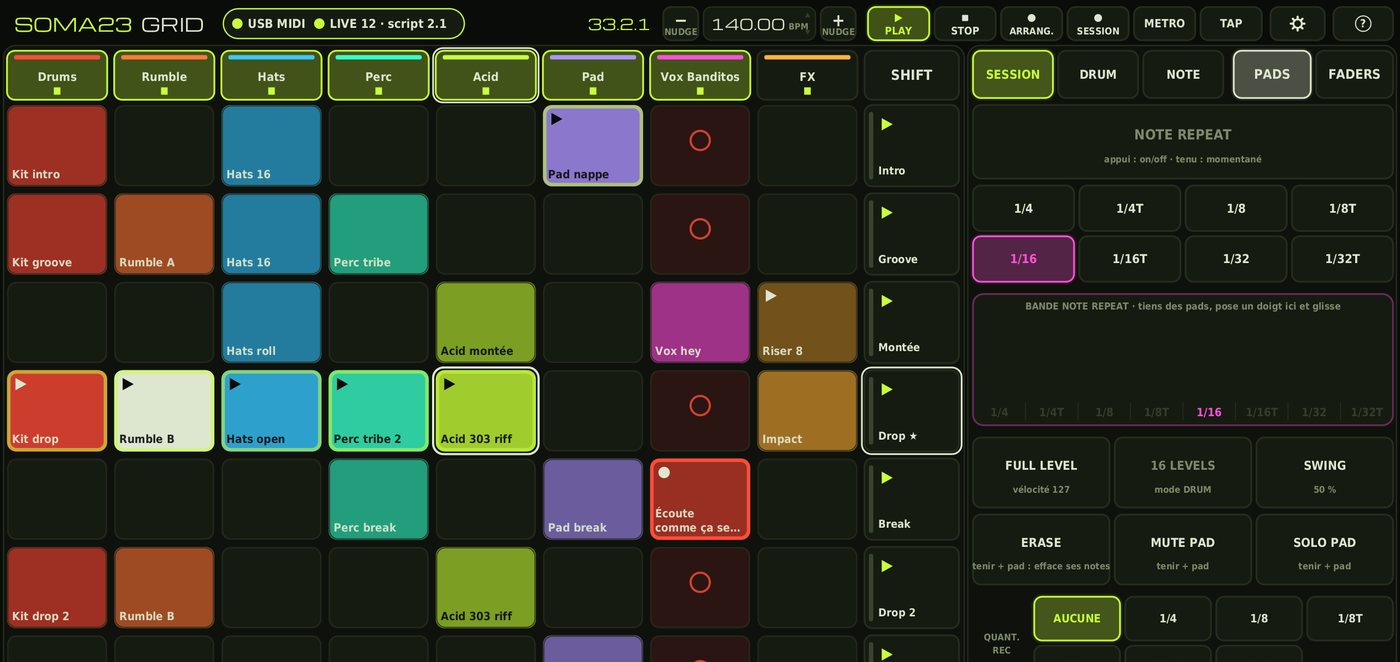
The 64-pad grid, 9 faders, knobs and the transport on your tablet, connected to Ableton Live over USB MIDI, with MPC-style note repeat and custom parameter banks.
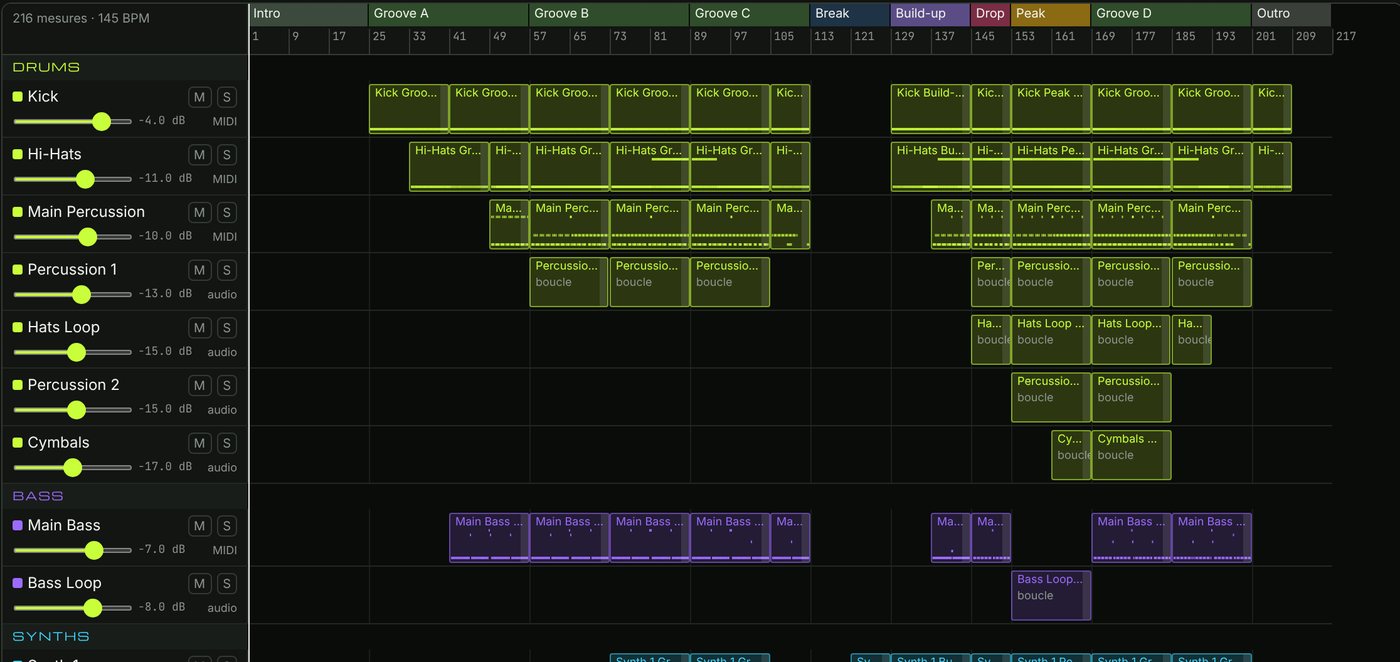
Sample banks in, an Ableton Live project out. You draw an energy curve, the engine writes the arrangement, the MIDI patterns and the .als. A 6-minute prototype to listen to.
From a vibrating string to mixing two tracks on the decks. Sound engineering explained simply, in eleven chapters: from the basic physics to the techno mix.
An alphabet, a dictionary, a grammar. And what you need to learn it.
What can’t be said, we play.
Notes on money, work and what we accept without ever deciding it. The articles are in French.
What I listen to, what I watch, what has mattered.
Frank Latreille-Ladoux passed away on 19 December 2025, aged 45, in Marseille. His label announced that he had “made his escape” — those who listened to him know where the phrase comes from.
Chartres, Strasbourg, Marseille. Rap laid over Gypsy jazz and music from Eastern Europe, lyrics that took the time to build an image rather than land a punchline. Le Figaro had called him “the pen of French rap”; he spent fifteen years building a body of work outside the formats, with no major label and no chasing of numbers. That way of doing things is what stays, as much as the records.
Two verses that turn childhood fairy tales inside out: Tom Thumb, Hansel and Gretel, Puss in Boots dropped into the city, the night and getting wasted. AL'TARBA sets the scene, Dooz Kawa answers with insomnia, doubt and the idea that he would only be recognised once he was gone. A lullaby for adults, which reads differently since December 2025.
My son knows it by heart. He isn’t old enough yet to understand half of it.
Lyon, the 2000s, a lion’s head for a banner. Lucio Bukowski, Anton Serra and the others did everything themselves: the beats, the videos, the distribution. No label, no waiting — a network that passes the work around and vouches for each other. It’s exactly what “Génération dette” describes: not playing the game, building alongside it.
Twenty years of rap and still the same anger, in a single verse: the price of a baguette, the bailiffs, embezzlement that costs twenty days in prison, and beatmakers who have moved to Suno. Produced by Oster Lapwass. The line about Matoub Lounès, murdered for his music, is a reminder of what it can cost elsewhere.
A single verse, no chorus, that holds up all the way through. Heykel moves from time slipping away to the hourglass, from the prison cell to Paris at night, from Gaza to Nahel, from love to loss, chaining images and wordplay. Writing that doubts out loud and ends on hope.
69db’s summer 2024 set at Fantasia Festival in Italy, on the Kernal Panik and Trackerz stage.
McLuhan had said it all by 1965: it isn’t the content that shapes us, it’s the very form of the channel. Sixty years later, we still comment on what’s on the screen without looking at the screen.
Jul, a.k.a. Soma23. Classical violin at the start, sound systems at the finish: the trajectory of a man who took the word “free” literally. Twenty-five years behind the machines, long enough to know that what can’t be said gets played, preferably loud.
A reader of Chomsky, he drew the only practical conclusion from Manufacturing Consent: bring his files home to a server in Helsinki, which he runs from his phone. Bourdieu would call it a strategy of distinction; he calls it hygiene.
Between sets, he codes controllers for Ableton (the commercial ones had the flaw of already existing), teaches restaurants to take an order without saying a word to anyone, and made up his own language, ÆN-23, for want of one that fit.
There is no cloud, only someone else’s computer. Here, it’s his.
Parties, festivals, club dates. Tell me the venue, the date and the capacity.
contact@soma23.fr